Best Beaches in Thailand
Thailand has two coastlines, hundreds of islands and a reputation for beaches that is mostly deserved. But “best” depends on what you want. Some people want powder-white sand and quiet. Others want beach bars, water sports and a busy night scene. A few want to dive straight from the shore. The good news is that Thailand has all of it.
Before the list, one idea matters more than any single beach: the weather. Thailand’s coasts are on different seasonal patterns, so the best beach in December may be a poor choice in September.
Understanding the two coasts
The Andaman Sea coast, on the west side, includes Phuket, Krabi, Koh Phi Phi, Koh Lanta and Koh Lipe. It is generally at its best from roughly November to April, when seas are calm and skies are clear. From May to October, the southwest monsoon brings heavier rain, rougher seas and strong currents. Some boat services reduce or stop.
The Gulf of Thailand coast, on the east side, includes Koh Samui, Koh Phangan and Koh Tao. Its pattern is different, and it tends to be drier through much of the middle of the year, with its heaviest rain usually arriving later in the year, around October to December.
This split is useful. If you travel in the middle of the year, look at the Gulf. If you travel in winter, the Andaman side is usually the safer choice.
Railay Beach, Krabi
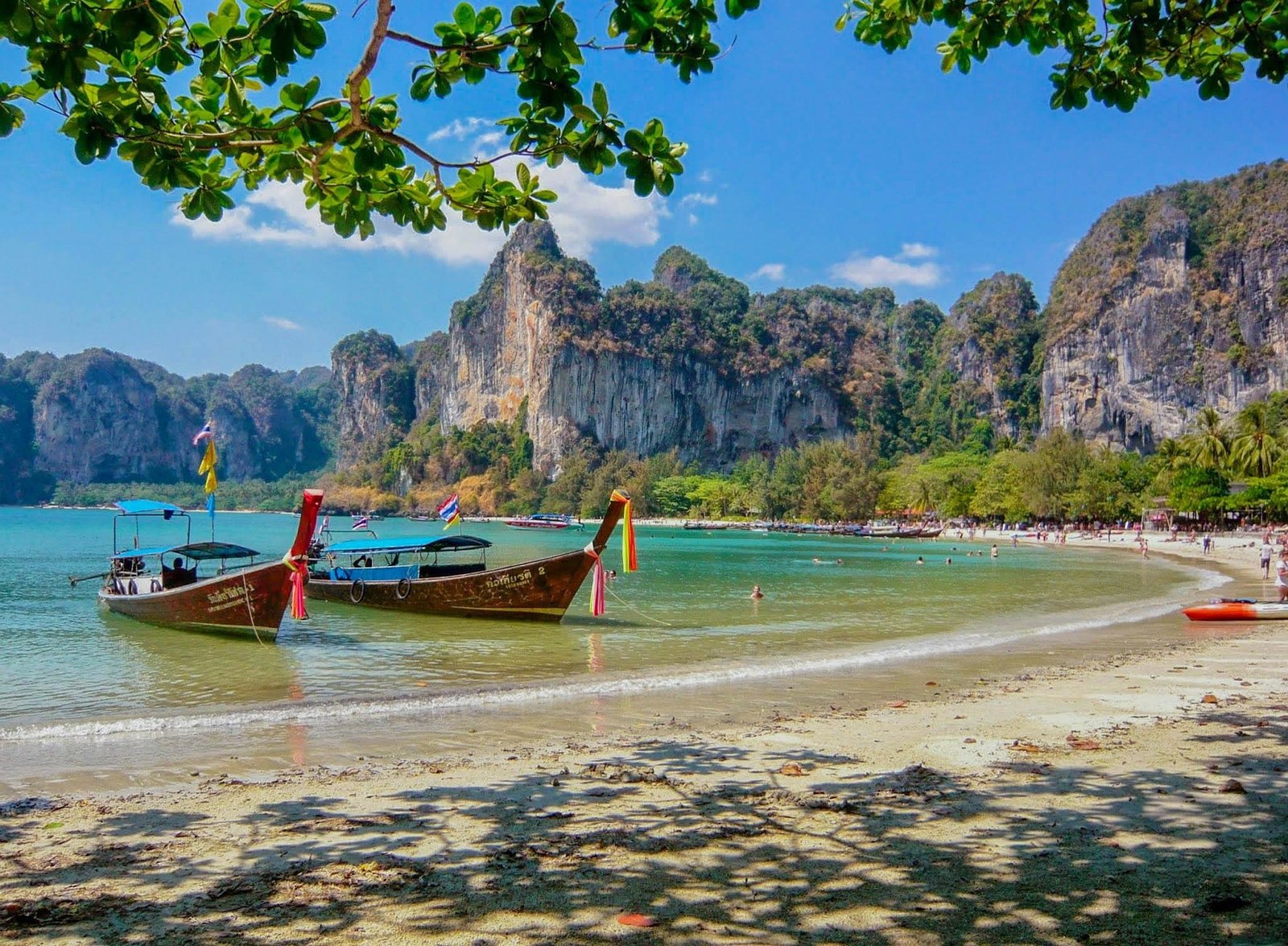
Railay is a small peninsula cut off from the mainland by limestone cliffs, and you can only reach it by boat. Longtail boats run from nearby Ao Nang. This lack of road access gives it a quieter feel than most beach areas. The scenery is dramatic, with tall rock walls rising behind the sand, and it is one of the best-known rock climbing destinations in the country.
Railay actually has several beaches. West Railay is the classic sunset spot, while East Railay is more about mangroves and long-tail boat docks. Phra Nang Beach, at the southern tip, is often described as one of the prettiest in Thailand. Expect crowds in the high season, especially in the middle of the day.
Koh Lipe, Satun
Koh Lipe sits in the far south, close to the Malaysian border, and belongs to the Tarutao National Marine Park area. It is smaller and calmer than Phuket, and its water is often described as being clearer than in most of the country. Sunrise Beach and Pattaya Beach (not to be confused with the city of the same name) are the main areas, and the island is small enough to walk across.
It is a good base for snorkeling, with reefs close to shore and boat trips to nearby islands. Because it is remote, it takes longer to reach. Most visitors arrive by speedboat from the mainland pier near Pak Bara, or by ferry from other southern islands, and services are seasonal, running mainly during the drier months. Check schedules before you plan.
Phuket’s best beaches
Phuket is Thailand’s largest island and has a beach for nearly every style. Patong is the busiest, with nightlife, shops and restaurants, and it suits people who want energy more than silence. Kata and Karon are calmer and more family friendly, with wide sand and decent surf during the rainy months. Nai Harn, in the south, is popular with both locals and visitors and has a more relaxed atmosphere.
One safety point deserves attention. In the monsoon season, many Phuket beaches have dangerous rip currents, and lifeguards fly red flags when swimming is unsafe. Take those flags seriously. Every year, visitors drown because they ignore warnings.
Koh Phi Phi and Maya Bay
The Phi Phi islands became world famous after a film shot at Maya Bay on Phi Leh island. The bay was closed to visitors in 2018 to allow the damaged coral to recover, and it reopened in January 2022 with strict limits. Visitor numbers are controlled, time spent there is limited, boats dock at the back of the island instead of in the bay, and swimming in the bay itself is not allowed.
These rules are there because mass tourism nearly destroyed the place. It is still a spectacular setting, but go with realistic expectations: you will share it with other boats, and you cannot linger. Many travelers actually enjoy the other beaches and viewpoints around Phi Phi Don more, including the climb to the main viewpoint above the twin bays.
Koh Lanta
Koh Lanta is a long island south of Krabi with a slower pace than Phuket or Phi Phi. Klong Dan and Long Beach are laid-back stretches, and further south the island becomes quieter and more rural. It also has an Old Town on the east coast, where wooden houses stand over the water. Lanta is popular with long-stay visitors and families who want space and fewer crowds. It is also a good base for day trips to nearby islands such as Koh Rok.
Koh Samui
Samui, on the Gulf side, has a wide range of beaches. Chaweng is the longest and busiest, with resorts, restaurants and nightlife. Lamai is somewhat calmer but still lively. Quieter options include Bophut, with its Fisherman’s Village area, and the north coast near Mae Nam. Samui has an airport, which makes it one of the easiest islands to reach, and it suits travelers who want comfort and variety. The sea can be calm for much of the year, though heavy rain can arrive toward the end of the year.
Koh Tao
Koh Tao is small and best known for diving. It is one of the places in the world where many people complete their first scuba certification, thanks to the numerous dive schools and relatively shallow, calm sites. If you do not dive, you can snorkel from beaches such as Shark Bay and Freedom Beach. It is not a huge beach island, but for water activity it is hard to beat.
Koh Samet and Koh Chang
If you are based in Bangkok and do not want a long trip, Koh Samet is the nearest well-known beach island, reached by road and a short ferry. It is busy on weekends with Thai visitors. Koh Chang, near the Cambodian border in the east, is larger and greener, with jungle, waterfalls and quieter beaches. Both follow the eastern Gulf weather pattern, so check the season.
The Similan Islands
The Similan Islands, in the Andaman Sea north of Phuket, are a national park with some of the clearest water in the region and fine white sand. They are also known for diving and snorkeling. The park is only open for part of the year, roughly mid-October to mid-May, and is closed during the rough monsoon months. Visitor numbers are managed to protect the coral, and you usually visit on a day trip or a liveaboard boat.
Protecting the places you visit
Thailand has introduced rules to protect coral and marine areas. Sunscreens containing certain chemicals, including oxybenzone and octinoxate, are banned in national parks, and fines apply. Choose mineral-based sunscreen when you visit marine parks. Do not touch or stand on coral, do not feed fish, and take your trash with you.
Practical notes
Entry rules in Thailand have changed several times in recent years, including a digital arrival card system, so check the official government source before traveling. Take insurance that covers water activities, because motorbike and boat accidents are among the most common problems visitors face. Never rent a scooter without a valid license and a helmet, since insurers often refuse claims otherwise.
Carry some cash for small island shops and boat fares, even though cards work in larger resorts. Island ATMs can run empty, and the fees are noticeable. Keep your valuables in a waterproof pouch when you are on a boat.
Final thoughts
There is no single best beach in Thailand, only a best beach for a certain month and a certain mood. If you want scenery, Railay or Phi Phi. If you want calm water, Koh Lipe. For nightlife, Patong or Chaweng. For diving, Koh Tao or the Similans. Match the coast to the season, respect the sea, and you will find a beach that fits.