How to Plan a 7 Day Trip to Italy
Italy is one of those countries where the hardest part of planning is deciding what to leave out.
Every region has its own food, its own dialect and its own reasons to stay longer. In seven days you cannot see it all, and trying to will leave you tired and standing in train stations more than in piazzas. The better approach is to pick a small number of places and give each of them enough time.
This guide walks through a simple, realistic plan built around three cities: Rome, Florence and Venice. It is the classic first-time route for a reason. The cities are far enough apart to feel different, close enough to connect by fast train, and each one has something you cannot get anywhere else.
Start with the Season
Italy is crowded in summer, and July and August can be hot enough to make midday sightseeing unpleasant, especially in Rome and Florence. Many people consider spring (April to June) and early autumn (September to October) the sweet spot. The weather is comfortable, daylight hours are generous, and the lines are shorter than in peak summer.
One more thing worth knowing: around 15 August, the holiday of Ferragosto, many Italians go on vacation and some smaller restaurants and shops close for days or even weeks. Big tourist areas stay open, but it changes the feel of a city.
Check Entry Rules Before Anything Else
Italy is part of the Schengen Area. Depending on your passport, you may need a Schengen visa, and visa appointments can take weeks to get. Do this before you book non-refundable flights or hotels. Schengen visa applicants are also required to carry travel insurance that meets the minimum medical coverage set by the rules, so sort that out early too. Border systems in Europe are also being updated, so check the official EU and Italian government pages close to your travel date rather than relying on an old blog post, including this one.
The Shape of the Trip
Fly into Rome and out of Venice, or the other way around. This is called an open-jaw ticket, and it saves you from backtracking. Often it costs about the same as a round trip, so always compare both options when you search.
A sensible split looks like this:
- Days 1 to 3: Rome
- Days 4 and 5: Florence, with a half-day or day trip
- Days 6 and 7: Venice
Rome: Three Days
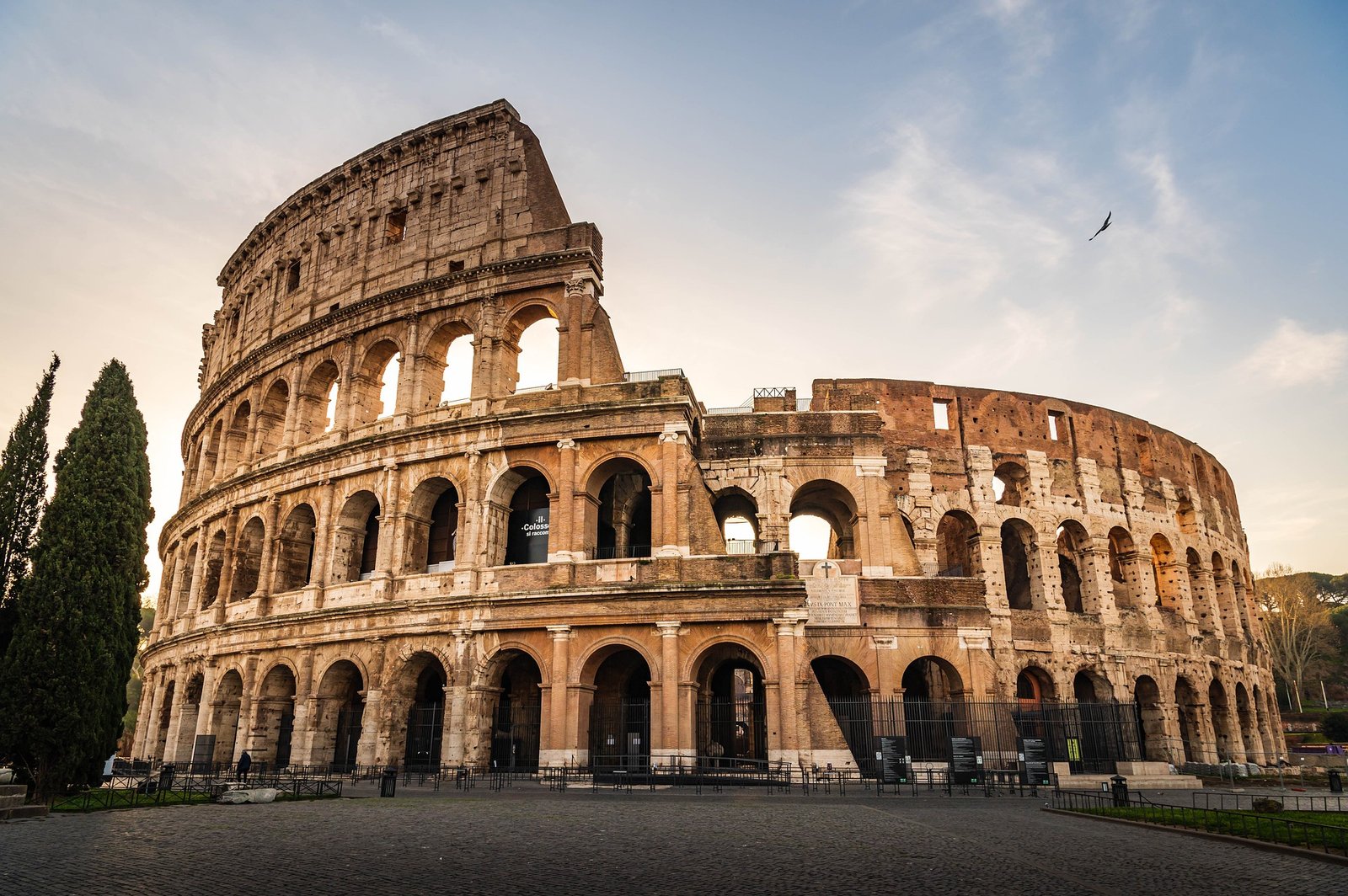
Rome is big, noisy and layered with history, and three days is the minimum to do it justice. Give your first day to the ancient center: the Colosseum, the Roman Forum and Palatine Hill. These are usually covered by one combined ticket, and it is smart to book in advance because walk-up lines can be long. Afterward, walk to the Trevi Fountain and the Pantheon in the evening, when the light is softer and the heat has eased.
On your second day, visit Vatican City. The Vatican Museums, which end in the Sistine Chapel, are enormous, so plan on several hours. The museums are generally closed on Sundays except for the last Sunday of the month, when entry is free and the crowds are intense, so most visitors are better off choosing another day. Dress rules apply in St. Peter’s Basilica: shoulders and knees should be covered. In the afternoon, cross the river and wander through Trastevere, a neighborhood known for narrow streets and small restaurants.
Keep your third day looser. You might visit the Borghese Gallery, which requires a timed reservation, then spend time in the park around it, or explore Piazza Navona and Campo de’ Fiori. Leave room to sit down and eat slowly. In Rome, that is part of the experience, not a break from it.
Getting to Florence
Italy’s high-speed rail network makes city-hopping easy. Trains between Rome and Florence take roughly an hour and a half, and Florence to Venice takes roughly two hours. The two main high-speed operators are Trenitalia (Frecciarossa) and Italo. Booking ahead usually gives you cheaper fares, but the stations are in the city centers, so you lose very little time compared with flying.
One small habit helps: if you buy a regional train ticket that is not tied to a specific departure time, you need to validate it in the machine on the platform before boarding. Skipping this can lead to a fine, even if you honestly bought a ticket.
Florence: Two Days
Florence is compact and walkable, and it holds an extraordinary amount of Renaissance art. The Uffizi Gallery is the main museum for painting, and the Accademia Gallery is where Michelangelo’s David stands. Both are popular, so reserve time slots ahead. Then take your time in the old center around the Duomo, the cathedral with its famous dome. Climbing the dome gives you a view over the red rooftops, but it needs a reservation and involves many steps.
Cross the Ponte Vecchio, the old bridge lined with jewelry shops, and continue to the Oltrarno side of the river. This quieter district has artisan workshops and a more local feel. For sunset, the Piazzale Michelangelo is a well-known viewpoint.
If you want a break from city streets, spend half a day outside Florence. Siena, with its medieval main square, and the Tuscan countryside are common choices. Pisa is also an easy train ride, although many people find an hour or two there is enough for the leaning tower.
Venice: Two Days
Venice has no cars, so you travel on foot or by water. The public water buses, called vaporetti, run along the Grand Canal and out to the islands. You will almost certainly get lost in the lanes, and that is fine. It is nearly impossible to stay lost for long, since the city is small and signs point toward the Rialto Bridge, St. Mark’s Square and the train station.
See St. Mark’s Basilica and the Doge’s Palace on your first day, ideally early before tour groups arrive. Later, ride a vaporetto the length of the Grand Canal to see the palaces from the water. On the second day, take a boat to the islands of Murano, known for glassmaking, and Burano, known for brightly painted houses.
Venice has been testing an entry fee for day visitors on selected busy days, and the details have changed from year to year. Visitors who stay overnight in the city are generally exempt, though they may still need to register. Check the official Venice city website before you go.
Money and Eating
Italy uses the euro. Cards are widely accepted, but carrying a small amount of cash is useful for coffee bars, small shops and public toilets. Tipping is not expected the way it is in some countries. Many restaurants add a small cover charge called coperto, which is normal and not a trick. A service charge may be added too, so read the bill before leaving extra.
Italian meal times run later than many visitors expect. Lunch is often around 1 pm, and dinner rarely begins before 7:30. Breakfast is light, usually a coffee and a pastry, and cappuccino is traditionally a morning drink. Nobody will arrest you for ordering one after lunch, but you may get a raised eyebrow.
A Few Practical Points
Book the big attractions in advance, especially the Colosseum, Vatican, Uffizi, Accademia and the Borghese. Pack comfortable shoes, because cobblestones and long walks will be daily companions. Watch your belongings around busy stations and tourist spots, where pickpockets operate. And if you plan to drive anywhere, note that many historic centers have restricted traffic zones known as ZTL. Entering one without a permit can result in a fine mailed to you months later. For a city-focused trip like this one, you do not need a car at all.
Final Thoughts
Seven days in Italy is short, and that is the point of planning it carefully. Three cities, trains between them, a handful of pre-booked sights and enough free time to wander will give you a trip that feels full instead of frantic. Leave one afternoon with nothing scheduled. In Italy, that is often when the best moments happen.